
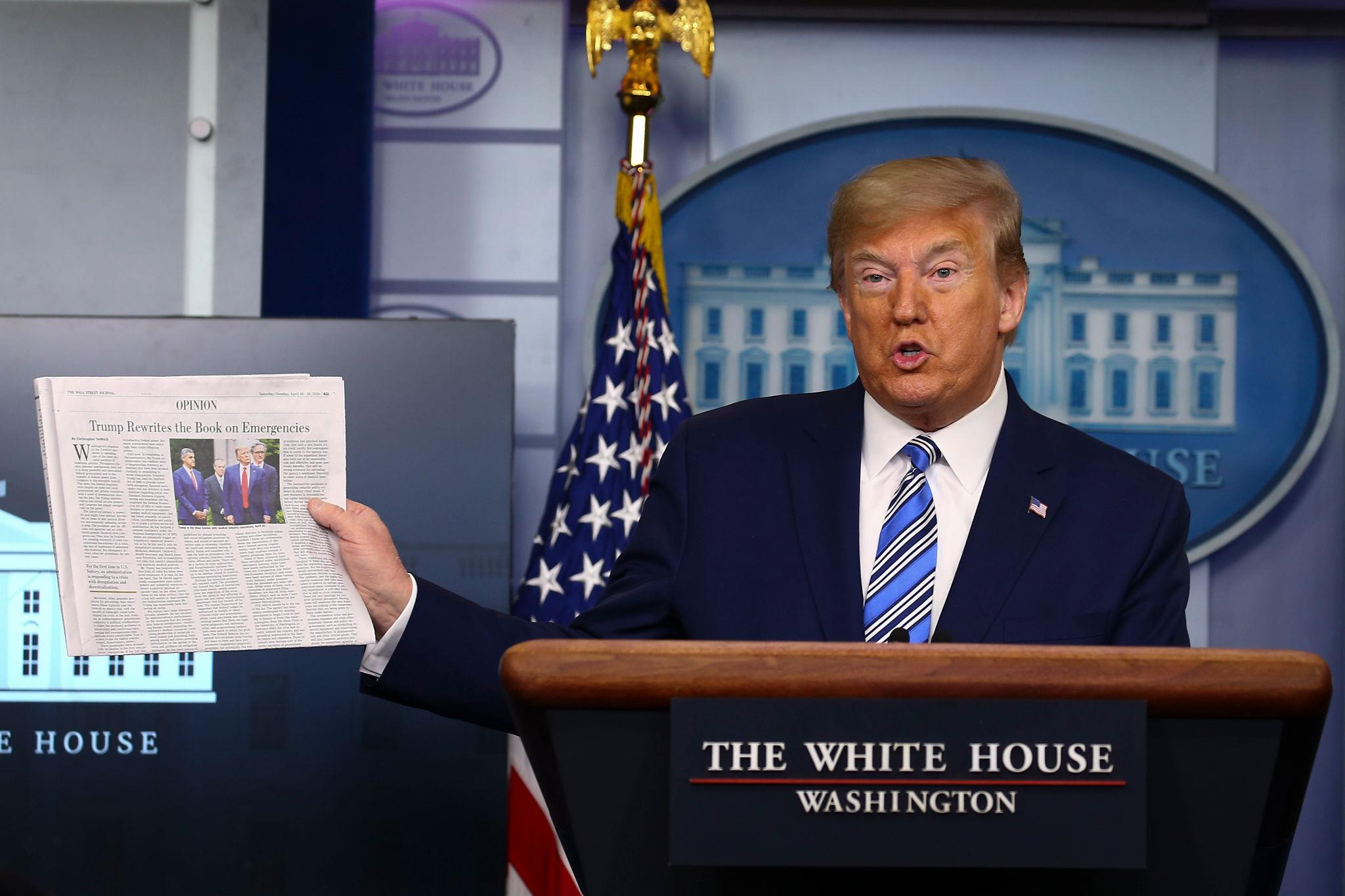
A federal judge has dismissed President Donald Trump’s $10 billion defamation lawsuit against The Wall Street Journal, its parent company and media executive Rupert Murdoch over a report involving convicted sex offender Jeffrey Epstein.
U.S. District Judge Darrin Gayles issued the ruling Saturday, October 31, 2026, in Miami, Florida, rejecting Trump’s amended complaint and dismissing the case with prejudice.
The lawsuit centered on a July 2025 Wall Street Journal report describing a sexually suggestive birthday letter and drawing that the newspaper said bore Trump’s name and appeared in an album prepared for Epstein’s 50th birthday in 2003.
Trump denied writing the letter and described the newspaper’s reporting as false, malicious and defamatory. He subsequently filed a lawsuit seeking at least $10 billion in damages, alleging that the publication had knowingly or recklessly published false information that damaged his reputation.
However, Judge Gayles concluded that Trump’s amended complaint failed to establish actual malice, a legal requirement for public figures pursuing defamation claims.
Under the standard established by the Supreme Court’s landmark 1964 decision in New York Times Co. v. Sullivan, public figures must demonstrate that a publisher knowingly published false information or acted with reckless disregard for whether it was true.
The judge had previously dismissed Trump’s original lawsuit in April 2026 but allowed his legal team an opportunity to submit an amended complaint. The revised filing was submitted in May.
In his latest ruling, Gayles said the amended allegations remained insufficient, describing them as vague and conclusory. He also noted that the Journal’s original report included Trump’s denial of writing the letter.
The dismissal is a significant legal victory for The Wall Street Journal, Dow Jones and Murdoch. Because the case was dismissed with prejudice, Trump cannot simply refile the same lawsuit in the district court.
A spokesperson for Trump’s legal team indicated that the president intends to appeal the decision, signaling that the legal dispute could continue in a higher court.
The case has become one of several high-profile legal battles involving Trump and major media organizations during his second presidential term, highlighting the continuing tensions between the White House and the American press.