Two suspected Russian missiles and a jet-powered drone reportedly fell on Polish territory during a major Russian overnight attack on Ukraine, raising fresh concerns about NATO security and the risk of a wider confrontation.
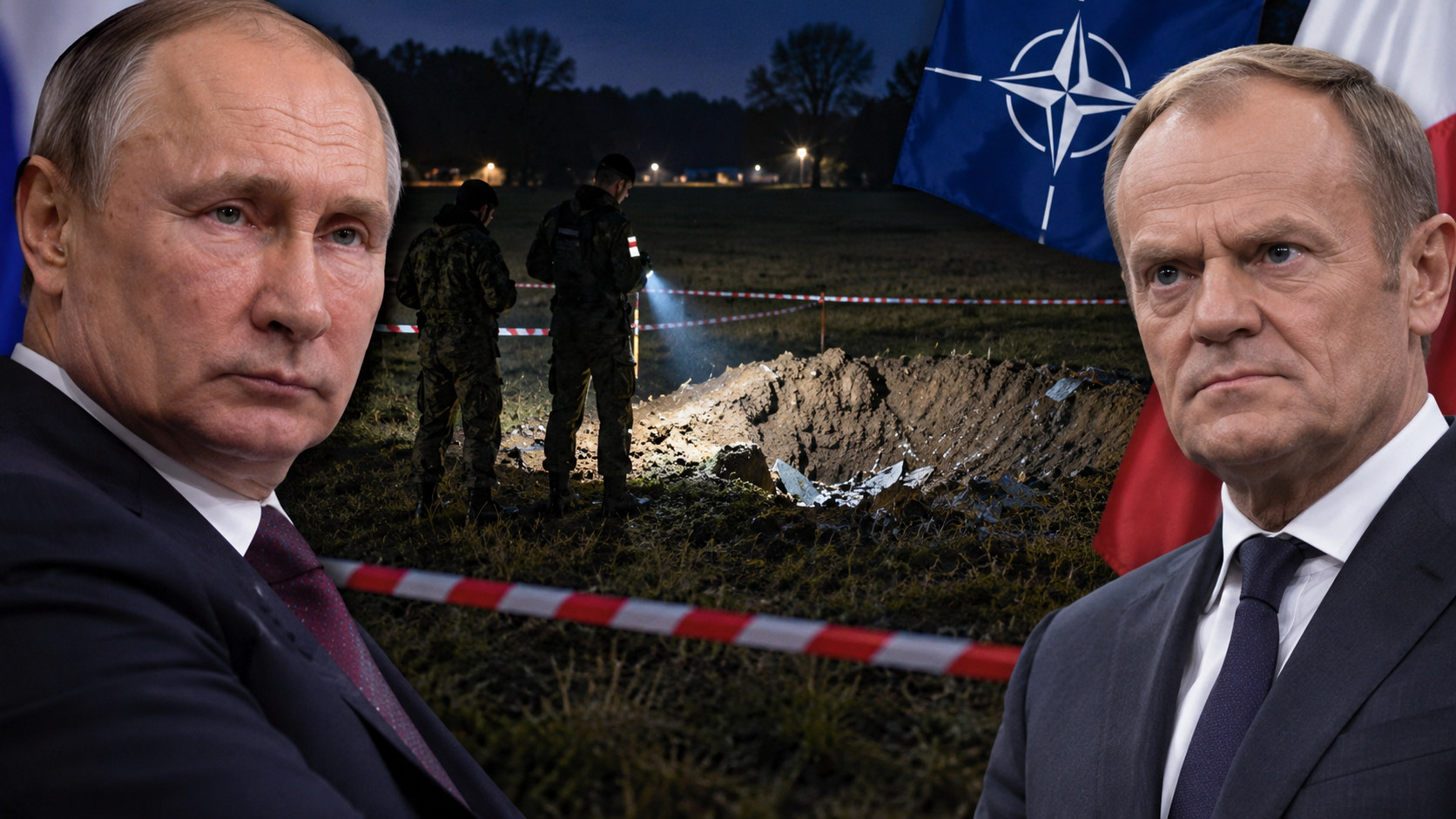
Poland’s Defense Minister, Wladyslaw Kosiniak-Kamysz, said the objects came down in three locations in southeastern Poland on November 20. The reported impact sites were Nowy Lipowiec, Rudnik nad Sanem and Molodycz.
According to Polish officials, one of the missiles was believed to be a Kh-101 cruise missile. It reportedly fell about 50 kilometers (31 miles) from the Ukrainian border, while the suspected jet-powered drone came down approximately 30 kilometers (20 miles) from the border.
No immediate injuries or property damage were reported.
The incident occurred during one of Russia’s heaviest bombardments of Ukraine. Ukrainian President Volodymyr Zelenskyy said Russia launched more than 400 drones and at least 110 missiles, including 27 ballistic missiles. Ukrainian officials reported that at least eight civilians were killed and more than two dozen others wounded.
Poland Suspects a Deliberate Provocation
Polish Prime Minister Donald Tusk said the incident appeared to be an intentional provocation by Russia. He suggested the timing could be connected to military exercises taking place in southeastern Poland.
The two-week exercise began on November 9 and involved forces preparing for a possible postwar mission in Ukraine. Troops from several European countries were participating in the drills.
Security analysts interviewed by Al Jazeera said the incident could fit a broader pattern of Russian actions testing NATO’s response to airspace violations and military pressure near alliance territory. However, the circumstances and intent behind the objects entering Poland remain important questions.
NATO Condemns the Incident
NATO Secretary-General Mark Rutte described the incident as a grave violation of Polish airspace and called it clearly dangerous. European officials also criticized the incident, while Poland sought additional support from NATO under its existing Eastern Sentry mission.
Possible support could include additional airborne surveillance capabilities, such as early-warning aircraft.
U.S. President Donald Trump appeared to downplay previous Russian incursions, saying some drones and missiles had entered Poland by mistake. His remarks came as U.S. representatives continued diplomatic efforts aimed at ending the war in Ukraine.
Could NATO Invoke Article 5?
The incident has renewed attention on Article 5 of the NATO treaty, which establishes the alliance’s collective-defense principle. Under the provision, an armed attack against one member can be considered an attack against all members.
However, Article 5 is not triggered automatically whenever an object or weapon enters a member country’s territory. Its invocation is a political decision requiring agreement among NATO allies.
Poland had not invoked Article 5 over the November 20 incident. It had also stopped short of requesting Article 4 consultations, which allow NATO members to discuss threats to their security.
Analysts cited by Al Jazeera said a direct military confrontation between Russia and NATO remained unlikely in the immediate aftermath of the incident. They pointed instead to the possibility of continued defensive preparations, cyberattacks, disinformation and other forms of pressure.
Risk of Wider Escalation Remains
The incident highlights the risks created by Russia’s war against Ukraine, particularly as missile and drone attacks increasingly affect areas close to NATO territory.
While the reported objects falling in Poland have raised serious security concerns, the available information does not establish that Russia deliberately launched an attack on Poland.
For now, NATO’s response is focused on assessing the incident, strengthening defensive readiness and managing the risk of further escalation.
The situation remains sensitive as diplomatic efforts to end the war continue and European countries weigh their security commitments to Ukraine and NATO’s eastern members.