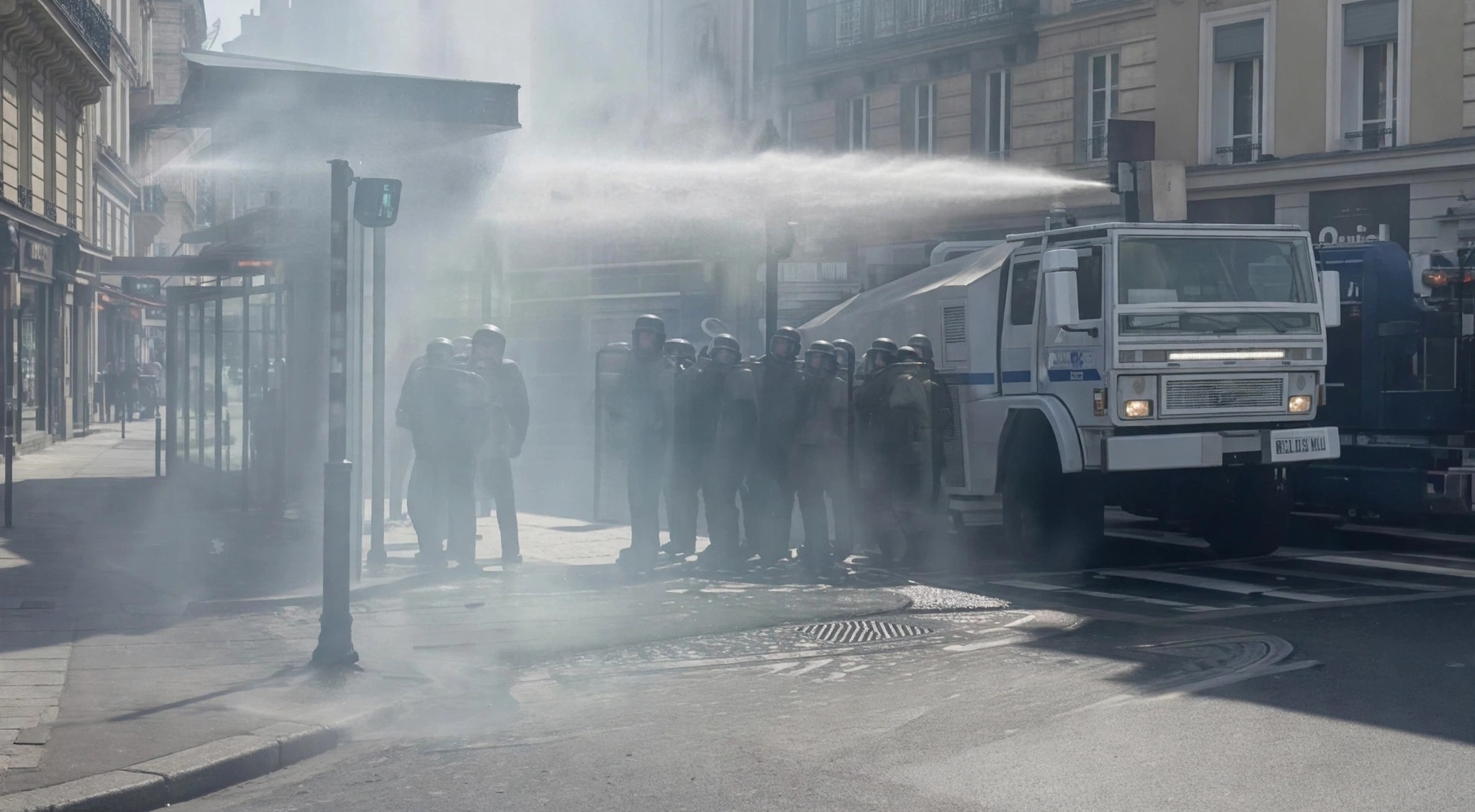
Police in France have used water cannons to disperse crowds during recent demonstrations in Paris, renewing debate over how authorities should respond when protests disrupt public spaces.
The scenes raise a question for the United States: Should President Donald Trump consider similar tactics at Immigration and Customs Enforcement (ICE) facilities when demonstrations interfere with law enforcement operations?
Where Is the Line Between Protest and Obstruction?
The First Amendment protects Americans’ right to peaceful assembly and protest. However, that protection does not give anyone unlimited permission to physically obstruct officers, threaten others, or interfere unlawfully with law enforcement duties.
Federal authorities have faced demonstrations outside ICE facilities in several U.S. cities. The response has prompted ongoing debate about public safety, the use of force, and the limits of federal enforcement powers.
Would Water Cannons Be the Answer?
Supporters of a tougher approach argue that officers must be able to carry out lawful operations without being physically blocked. Others warn that water cannons can injure people and escalate confrontations, particularly when peaceful demonstrators are caught in a crowd-control response.
France’s experience also highlights the importance of proportionality. Police use of force must be assessed in context, including the behavior of the crowd and the risks involved.
For the Trump administration, the challenge is balancing effective law enforcement with constitutional rights and public safety.
The central question is not simply how forcefully authorities should respond, but how they can protect lawful operations while respecting peaceful protest.