
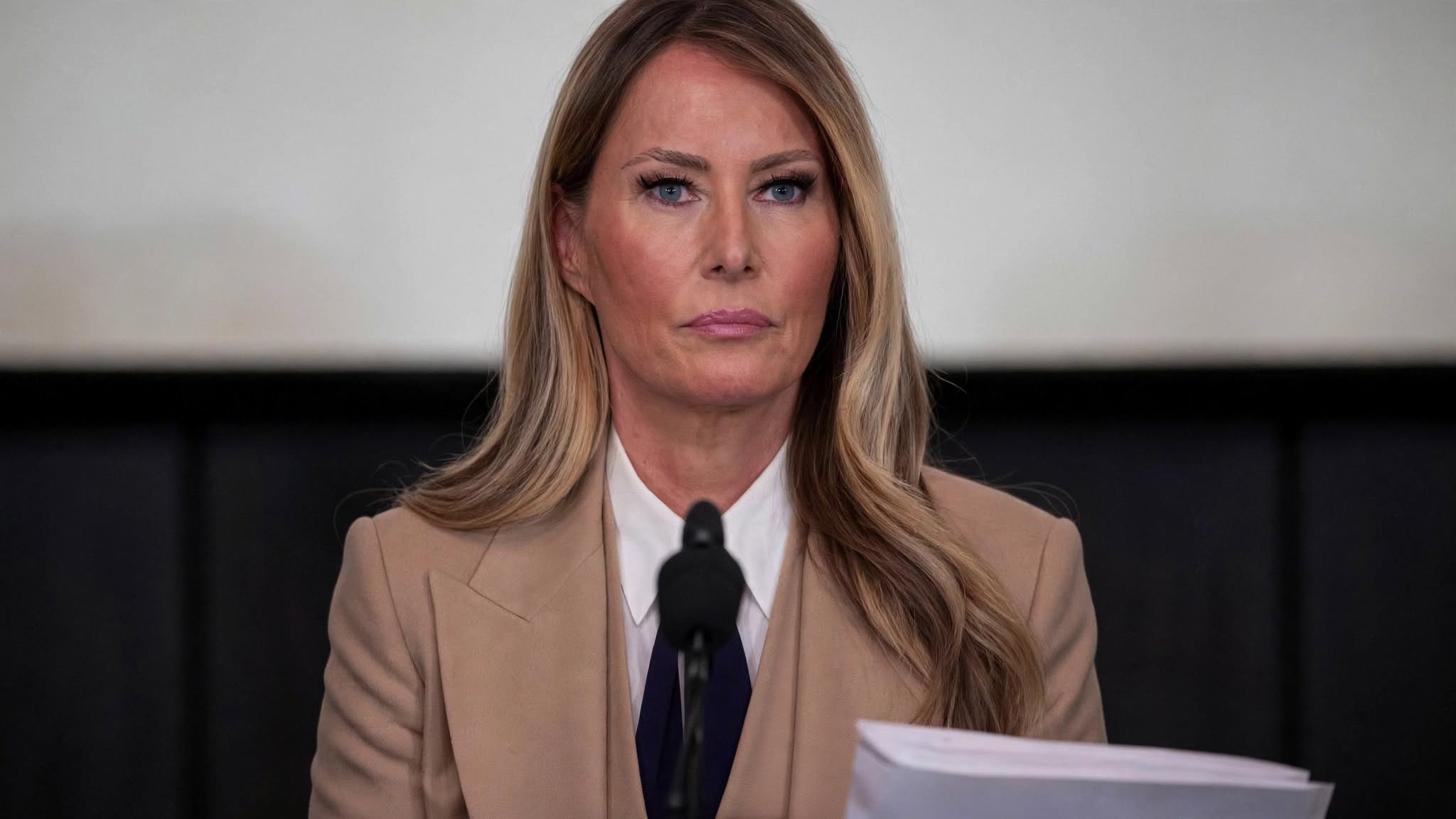
NEW YORK – A federal judge in Manhattan has dismissed a lawsuit that author Michael Wolff filed against First Lady Melania Trump. Wolff had asked the court to decide in advance whether his public comments linking her to Jeffrey Epstein were defamatory or protected speech. The judge refused to answer that question ahead of time.
U.S. District Judge Mary Kay Vyskocil of the Southern District of New York dismissed the case in a 45-page opinion in May 2026, on grounds known as prudential abstention. Judgment in Mrs. Trump’s favor was entered days later. The opinion does not rule on whether Wolff’s statements were false, and it does not say they were protected by the First Amendment. It says only that Wolff cannot use a preemptive federal lawsuit to lock in legal protection before a regular defamation claim is brought.
In her opinion, the judge said Wolff was asking for a ruling that he would win if the first lady sued him, which she said is “not how the federal courts work.” She acknowledged the two sides have a real dispute but said they must resolve it the same way everyone else does. She also criticized the filing as tactical gamesmanship and said the federal courts would not be pulled into refereeing an abusively presented spat.
How the dispute began
The case started after Wolff made public remarks about Mrs. Trump’s social circle and Epstein, the financier who died in federal custody in 2019 while awaiting trial on sex-trafficking charges. Alejandro Brito, the first lady’s attorney, sent a cease-and-desist letter demanding a retraction and a public apology. The letter said the remarks caused serious reputational and financial harm and warned that she would have no choice but to sue for defamation, seeking up to $1 billion.
Wolff did not retract. He went to a New York state court and asked for a declaration that his commentary was lawful, relying on a state anti-SLAPP law meant to protect speech on public issues from retaliatory lawsuits. Mrs. Trump has denied any friendship or ties with Epstein.
Why the case moved to federal court
Mrs. Trump’s lawyers moved the case to federal court, where it was docketed as Wolff v. Trump (No. 1:25-cv-10752). The judge agreed that federal jurisdiction technically existed because the parties live in different states and the amount at stake is high enough. She still used her discretion to decline the case under the Supreme Court’s Wilton/Brillhart doctrine, which lets federal courts refuse to issue declaratory judgments when the dispute can be resolved through ordinary litigation.
The judge concluded that Wolff was trying to win a “race to the courthouse” in New York after Mrs. Trump had signaled she would sue in Florida.
What happens next
Because the dismissal rests on procedure, the main legal questions are still open. If Mrs. Trump files a defamation suit, it would proceed under the usual rules. As a public figure, she would have to meet the “actual malice” standard from New York Times Co. v. Sullivan, which means proving that statements were published knowing they were false or with reckless disregard for the truth.
Wolff has appealed to the U.S. Court of Appeals for the Second Circuit (No. 26-1674), arguing that the judge abused her discretion by refusing to protect a journalist facing a threatened ruinous lawsuit. Separate proceedings over sanctions have continued in the trial court, but they do not change the core ruling that federal judges will not issue advisory opinions on speech before a defamation claim is properly filed.