
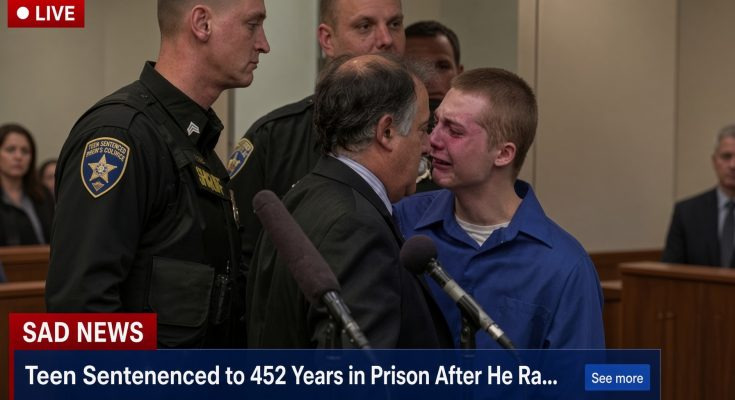
A shocking claim that a teenager was sentenced to 452 years in prison has gained widespread attention on social media. However, reports examining the viral courtroom footage indicate that the video has been taken out of context and does not show the sentencing described in online posts.
According to fact-checking reports, the footage circulating online is connected to an earlier criminal proceeding, not a court hearing in which a teenager received a 452-year prison sentence.
The distinction has become important as the dramatic claim continues to spread across social media platforms, often accompanied by emotional courtroom clips and misleading descriptions.
How the 452-Year Claim Spread
The controversy began when short videos showing an emotional young man inside a courtroom were shared online with captions claiming he had been sentenced to 452 years behind bars.
However, fact-checkers who examined the footage reported that the individual had previously received a 15-year prison sentence in 2016.
The video was reportedly connected to a probable-cause proceeding rather than the sentencing hearing described in viral posts.
Despite the lack of verifiable court documents, case numbers or primary evidence supporting the extraordinary 452-year claim, versions of the story continued appearing across websites and social media accounts.
As the claim was repeated, it gained the appearance of credibility even though the available evidence did not support the viral narrative.
Why a 452-Year Sentence Sounds Possible
Extremely long prison sentences are possible in certain criminal cases, particularly when a defendant is convicted of multiple offenses and receives separate penalties that must be served consecutively.
When individual sentences are added together, the total can extend far beyond a person’s natural lifespan.
However, the fact that such sentences are legally possible does not prove that the specific 452-year sentence described in the viral posts actually happened.
In this case, the available evidence does not establish that the teenager shown in the footage received the punishment being claimed online.
The Debate Over Juvenile Justice
Although the viral 452-year claim is not supported by the evidence reviewed by fact-checkers, the controversy highlights broader questions about how the justice system handles young offenders.
Courts and lawmakers often face difficult decisions when teenagers are accused of serious crimes. Victims and their families may seek accountability and long-term protection, while defense attorneys and rehabilitation advocates emphasize that adolescents have different developmental characteristics from adults.
Young defendants can still face lengthy prison terms depending on the crimes involved, the jurisdiction and the applicable sentencing laws.
The debate continues over whether the justice system should place greater emphasis on rehabilitation and the possibility of personal change or prioritize punishment based on the seriousness of the offense and its impact on victims.
Why Verifying Viral Courtroom Videos Matters
The story illustrates how authentic courtroom footage can be used to support a misleading narrative when it is shared without its original context.
Fact-checkers found that the circumstances surrounding the video were substantially different from the claims attached to it online.
When evaluating extraordinary criminal justice stories, important details include the court, jurisdiction, defendant, charges and official sentencing records.
Without those details, dramatic claims can spread rapidly before readers have an opportunity to determine what actually happened.
Ultimately, the viral allegation that a teenager recently received a 452-year prison sentence is not supported by the available evidence reviewed in the reports described above.
The episode serves as a reminder that dramatic videos and shocking headlines should not automatically be accepted as accurate accounts of real court proceedings. Reliable information and documented evidence remain essential when discussing criminal cases and the justice system.