
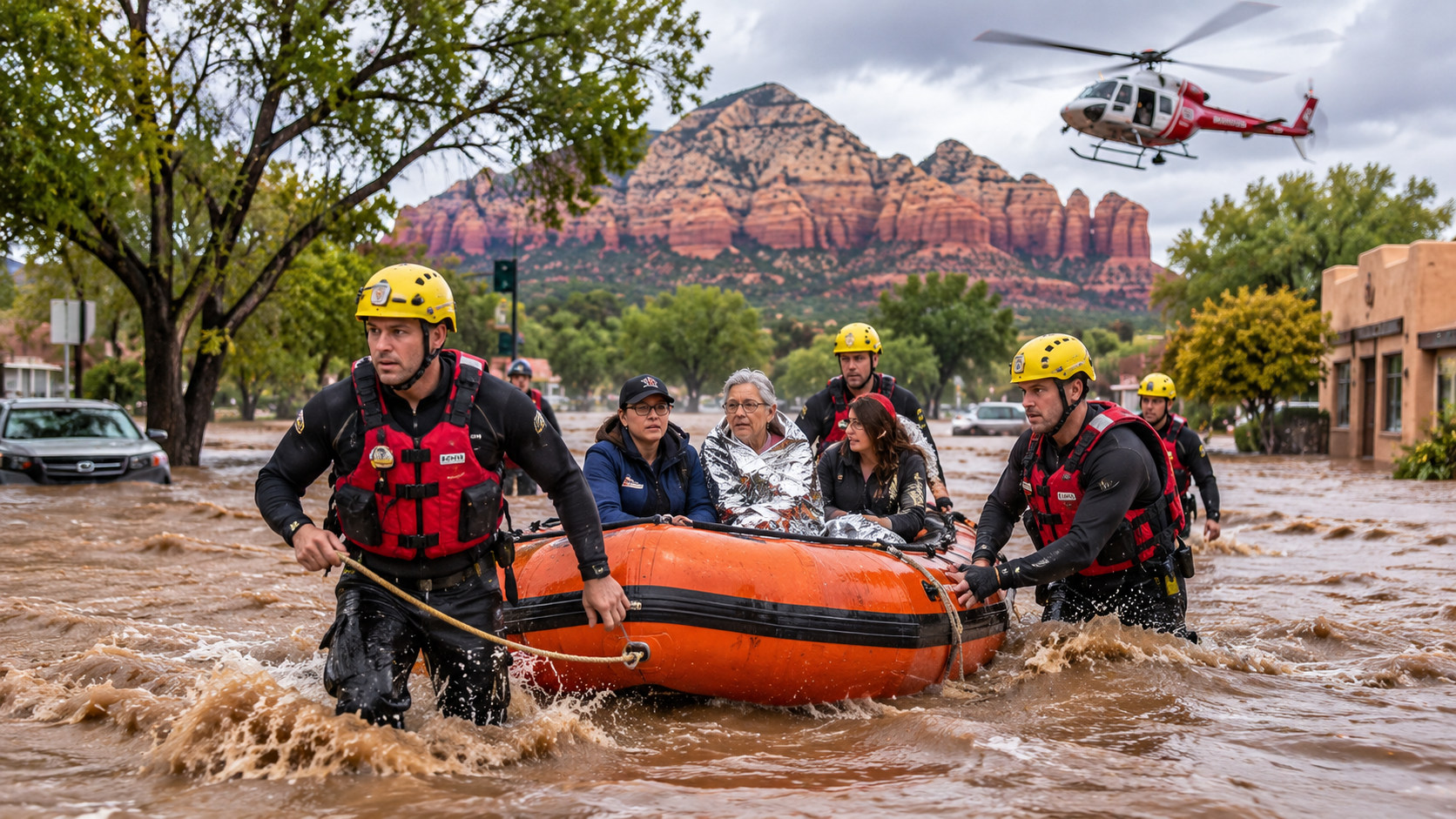
Heavy rainfall triggered widespread flash flooding across Arizona and Colorado on Sunday, November 1, forcing evacuations, closing major roads and prompting emergency rescues as rivers and creeks rose to dangerous levels.
One of the most serious situations developed in Pagosa Springs, Colorado, where officials warned that the San Juan River could reach levels higher than those recorded during the devastating 1911 flood.
Authorities ordered residents in low-lying areas to evacuate, closed roads into the town and urged people to avoid unnecessary travel as emergency crews prepared for additional flooding.
Colorado Town Faces Potentially Historic Flooding
In Pagosa Springs, the San Juan River was forecast to crest at approximately 21.9 feet Sunday night, significantly above the 17.8-foot level recorded during the 1911 flood.
The town restricted incoming traffic and issued evacuation orders for vulnerable areas along the San Juan, Rio Blanco, Navajo and Piedra rivers.
Officials warned that rescue operations could become difficult as conditions deteriorated. Residents unable to evacuate were instructed to shelter in place, while those under mandatory evacuation orders were told to leave if possible.
The town also warned residents to avoid the San Juan River because sewage was being discharged into the waterway during the emergency.
Helicopter Rescues in Arizona
In Sedona, Arizona, rising floodwaters from Oak Creek trapped residents inside homes and threatened nearby neighborhoods.
State rescue crews used aircraft to assist with rooftop evacuations, while emergency teams helped residents relocate from affected properties.
Nearly 20 homes in Yavapai County had residents who needed emergency assistance to relocate, according to county officials.
Flooding also affected Flagstaff, Tucson, Camp Verde and communities in Gila County. In Gisela, authorities ordered a full evacuation as water levels rose along Tonto Creek.
Man Reported Missing in Flagstaff
In Flagstaff, police were searching for a man who reportedly fell into fast-moving floodwaters and was not seen resurfacing.
Heavy rain overwhelmed storm drains and flooded roads, while residents and local organizations worked to keep water out of buildings.
A National Weather Service meteorologist in Tucson said some areas were receiving two or three months of rainfall within just a few days.
More Rain and Dangerous Conditions Expected
The National Weather Service issued flood warnings and watches across large portions of Arizona and surrounding areas, including parts of southwestern Colorado and New Mexico.
Additional rainfall was expected through Monday, raising concerns about saturated ground, rising waterways and roads becoming impassable.
Authorities urged residents to follow evacuation instructions, stay away from rivers and flooded areas, and never attempt to drive through standing or moving floodwater.
The storms have created a dangerous situation across the Southwest, with emergency crews continuing rescue and response operations as communities face the threat of further flooding.